PRISM RISK SCORING
COMPOSITE RISK INTELLIGENCE ACROSS 8 DIMENSIONS
PRISM evaluates every entity across sanctions, PEP status, jurisdiction risk, debarments, offshore leak appearances, network proximity, shell indicators, and corporate history. Each dimension is weighted, scored, and combined into a single 0–100 composite risk score with full auditability.
OVERVIEW
Not a blacklist check. A risk ontology.
Traditional screening returns a binary match/no-match result. PRISM goes further: it scores every entity across 8 weighted risk dimensions, producing a composite score that reflects the totality of risk — not just whether a name appears on a list.
Each dimension contributes independently. Sanctions presence (+80) carries the most weight, followed by PEP tier (+50), debarments (+35), and jurisdiction risk (+30). Network proximity, shell indicators, offshore leak appearances, and historical sanctions add nuance. The result is a score capped at 100, with full dimension-level breakdown for audit and explainability.
PRISM
HOW IT WORKS
[ SIGNAL EXTRACTION ]
Extract risk signals from resolved entity data.
Once IRIS resolves an entity, PRISM scans the unified record for 8 categories of risk signals: active sanctions, PEP designations, debarment records, greylist jurisdictions, offshore leak appearances, network connections to flagged entities, shell company indicators, and historical sanctions with temporal decay.
[ WEIGHTED SCORING ]
Each signal receives a calibrated weight.
Sanctions presence contributes up to +80 points. PEP status adds up to +50 (tier-dependent). Debarments: +35. jurisdictional risk: +30. Network proximity and shell indicators are capped at +30 and +20 respectively. Each weight is calibrated against institutional risk frameworks and can be configured per deployment.
[ TEMPORAL DECAY ]
Historical risk fades, but never disappears.
When an entity is delisted from a sanctions program, the associated risk score doesn't drop to zero. PRISM applies an exponential decay function — the signal weakens over time but remains visible in the composite score. This ensures that previously sanctioned entities still surface elevated risk during screening.
[ STRUCTURED OUTPUT ]
Every score is explainable and auditable.
The PRISM output includes the composite score (0–100), risk tier classification (CRITICAL/HIGH/MEDIUM/LOW), full dimension-level breakdown, contributing signals with source citations, and temporal context. Every number is traceable to its upstream source for regulatory audit.
PRISM ENGINE
CAPABILITIES
P01
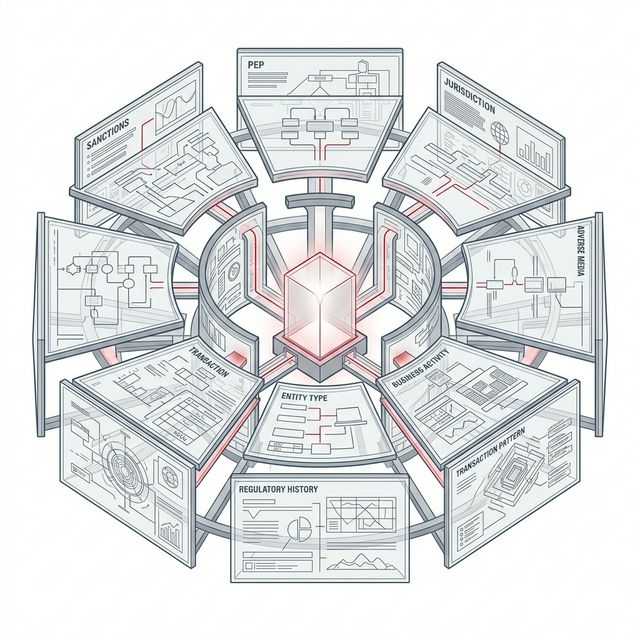
8-DIMENSION MODEL
Sanctions, PEP, jurisdiction, debarments, offshore leaks, network risk, shell indicators, and corporate history. Each scored independently with configurable weights.
P02
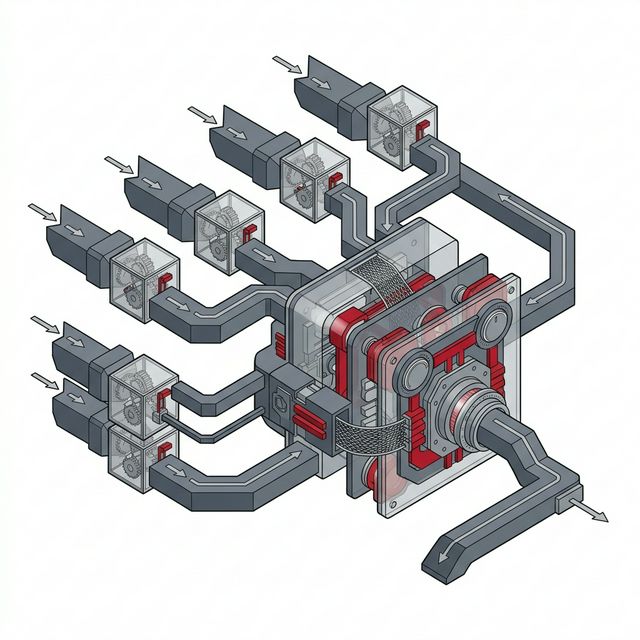
COMPOSITE SCORING
Weighted signals combine into a single 0–100 score. Non-linear aggregation prevents any single dimension from dominating without cause.
P03
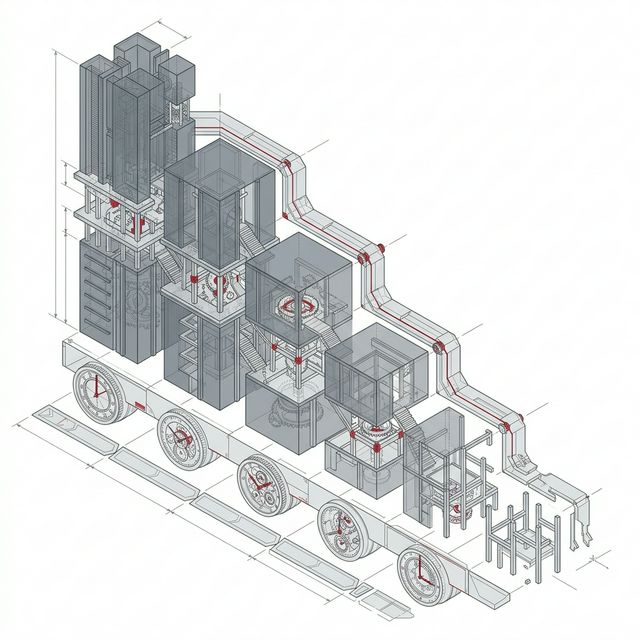
TEMPORAL DECAY
Historical sanctions and expired PEP designations decay exponentially. Configurable half-life ensures institutional memory without permanent stigma.
P04

WEIGHT CALIBRATION
Per-dimension weights are configurable per deployment. Financial institutions, defense contractors, and government agencies can tune scoring to their risk appetite.
PRISM RISK SCORING
SOLUTIONS
[ SCORE COMPOSITION ]
Full visibility into what drives every risk score.
Every PRISM score comes with a complete dimension-level breakdown. Compliance officers can see exactly which signals contributed — sanctions presence, jurisdiction risk, network proximity — and trace each to its authoritative source. No black boxes.
[ TIER CLASSIFICATION ]
Automatic risk tier assignment for operational workflows.
Entities are classified into CRITICAL (75-100), HIGH (50-74), MEDIUM (25-49), and LOW (0-24) tiers. Tier thresholds are configurable. Tier changes trigger real-time alerts and can drive automated escalation, hold, or release workflows.
[ CONFIGURABLE WEIGHTS ]
Tune PRISM to your institution's specific risk posture.
Different institutions have different risk appetites. A defense contractor may weight jurisdiction risk higher than a retail bank. PRISM supports per-deployment weight configuration, with guardrails to prevent miscalibration and ensure regulatory compliance.